
SoFi Stadium — World Cup 2026 Venue: Matches, City Guide & Facts
 Available in US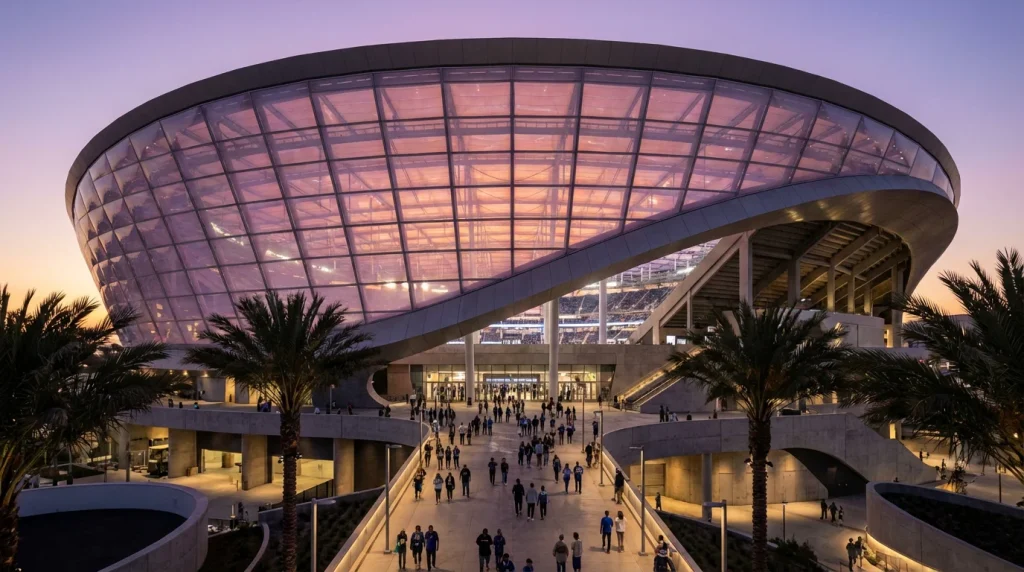
Table of Contents
The first time I saw footage from inside SoFi Stadium, I thought the architects had confused a football ground with a science-fiction set. A translucent canopy roof that lets natural light pour across the pitch while shielding 70,000 spectators from the California sun, a 70,000-square-foot infinity screen that wraps around the interior like a digital halo, and a playing surface sunk 30 metres below street level so the building hugs the landscape rather than dominating it. This is where the 2028 Olympic ceremonies will happen, where the Super Bowl has already been hosted, and where the 2026 FIFA World Cup brings some of the tournament’s biggest fixtures to Los Angeles. For Australian punters following the action, SoFi is the venue that will feature on your screens more than any other outside the final.
Stadium at a Glance
Numbers alone do not capture what makes a stadium special, but they set the frame. SoFi Stadium opened in September 2020 at a construction cost of US$5.5 billion — the most expensive stadium ever built, anywhere on the planet. It sits in Inglewood, a suburb of Los Angeles roughly 5 kilometres from LAX airport, and serves as the home ground for both the Los Angeles Rams and Los Angeles Chargers of the NFL.
| Detail | Information |
|---|---|
| Full Name | SoFi Stadium |
| Location | Inglewood, Los Angeles, California |
| Opened | September 2020 |
| Construction Cost | US$5.5 billion |
| Capacity (FIFA configuration) | Approximately 78,000 |
| Surface | Natural grass (removable tray system) |
| Roof | ETFE canopy (translucent, not fully enclosed) |
| Elevation | 30 metres below ground level |
| NFL Tenants | LA Rams, LA Chargers |
| Other Major Events | Super Bowl LVI (2022), 2028 Olympic Ceremonies |
The FIFA configuration lifts capacity from the standard NFL 70,000 to approximately 78,000 by reconfiguring the lower bowl to accommodate a full-size football pitch. The playing surface uses a removable natural grass tray system — a technology that allows groundskeepers to grow turf off-site and install it before match days, ensuring the pitch quality meets FIFA standards regardless of what event occupied the stadium the week before. This matters for betting purposes: pitch condition directly affects playing style, and a pristine natural surface at SoFi favours possession-based teams over sides that rely on long balls and aerial duels.
The ETFE canopy roof is translucent rather than fully enclosed, meaning the stadium is technically open-air despite appearances. Temperature inside is typically 3-5 degrees cooler than outside, but Los Angeles in June averages 24-28 degrees Celsius — a comfortable range for football that should not produce the heat-related fatigue seen at Qatar 2022. Wind is minimal due to the sunken design, which removes a variable that can disrupt set-piece delivery and crossing accuracy.
World Cup 2026 Matches at SoFi
SoFi Stadium hosts a significant chunk of the tournament schedule — group matches, Round of 32 fixtures, and at least one quarter-final. It is among the most-used venues in the entire tournament, reflecting FIFA’s confidence in the facility and Los Angeles’ infrastructure. The opening match of the hosts’ campaign — USA vs Paraguay on 12 June — kicks off the Group D schedule here, guaranteeing a charged atmosphere from the first whistle.
While the full match allocation has not been formally locked beyond group-stage fixtures at the time of writing, confirmed and expected matches include the USA opener, additional group-stage fixtures from multiple groups, and knockout-round matches through the quarter-final stage. For Socceroos fans, the key SoFi fixture is the USA vs Paraguay match — not because Australia play there, but because the result of that game directly shapes the Group D dynamic heading into the Socceroos’ matchday-two clash with the Americans in Seattle. A comfortable USA win over Paraguay at SoFi would confirm American dominance in the group, while a stumble would blow the qualification race wide open.
The venue’s capacity of 78,000 in FIFA configuration makes it the largest World Cup stadium in the western USA. Tickets for SoFi matches — particularly the USA fixtures and any quarter-final — are among the most expensive in the tournament, with secondary-market prices for premium seats exceeding US$1,500 during the 2022 Super Bowl. Australian fans travelling to watch matches should expect similar demand and plan accordingly.
Los Angeles — Getting There & Around
I have been to Los Angeles three times, and every visit confirms the same truth: this city runs on cars, not public transport. Getting from LAX airport to SoFi Stadium is a 10-minute drive — or a 45-minute bus ride if you are relying on the LAX FlyAway shuttle and local connections. The new Inglewood Transit Connector, a 2.7-kilometre automated rail link connecting the Metro K Line to the stadium precinct, is under construction with a target completion ahead of the 2028 Olympics. Whether it opens in time for World Cup 2026 fixtures is uncertain, so plan on rideshare or rental cars for stadium access.
Direct flights from Sydney and Melbourne to LAX operate daily with Qantas, United, and Delta — the flight time is approximately 13.5 hours eastbound. Los Angeles is 17 hours behind AEST during the World Cup period (UTC-7 for Pacific Daylight Time), so a 19:00 local kick-off translates to 12:00 AEST the following day. The time difference is significant for adjusting your body clock if you are attending in person but works in your favour for TV viewing — most evening matches at SoFi land in the Australian lunch-to-afternoon window.
Accommodation in Inglewood is limited to a handful of hotels within walking distance of the stadium. Most visitors stay in the wider LA area — Santa Monica, Downtown LA, or the airport hotels — and drive or rideshare to the venue. Budget A$200-400 per night for mid-range accommodation during the World Cup period, with prices escalating sharply for matches involving the USA or knockout fixtures.
Match Times in AEST
The Pacific time zone placement of SoFi Stadium is a gift for Australian viewers. Where eastern-US venues produce 03:00-05:00 AEST starts, SoFi’s California location shifts kick-offs to late morning and early afternoon in Australian time. The difference between watching a match at 3am and 12pm is the difference between a dedicated punt and a casual lunchtime flutter — and that accessibility influences the volume of betting activity on SoFi-hosted fixtures from Australian markets.
| Local Kick-Off (PT) | AEST Equivalent | Viewing Convenience |
|---|---|---|
| 12:00 (noon) | 05:00 (+1 day) | Early risers only |
| 15:00 (3pm) | 08:00 (+1 day) | Comfortable morning viewing |
| 18:00 (6pm) | 11:00 (+1 day) | Late morning — ideal |
| 19:00 (7pm) | 12:00 (+1 day) | Lunchtime — perfect |
Most World Cup matches at SoFi are scheduled for afternoon or evening local time, which means the majority fall between 08:00 and 12:00 AEST. That window is the sweet spot for Australian engagement — you can watch live on SBS, follow the markets in real time, and still get on with your day. Knockout-stage matches at SoFi will almost certainly be evening kick-offs (18:00-19:00 PT), placing them squarely in the 11:00-12:00 AEST range that maximises both television audience and betting volume from the Australian market.
Stadium History & Highlights
SoFi Stadium may be new, but it has already hosted moments that define modern American sports. Super Bowl LVI in February 2022 drew 112.3 million television viewers as the Los Angeles Rams defeated the Cincinnati Bengals 23-20 on home turf. The stadium’s infinity screen — officially called the “Oculus” — displayed real-time statistics and replays that set a new standard for in-venue fan experience. For football specifically, SoFi hosted multiple matches during the 2023 CONCACAF Gold Cup and has become a regular venue for international friendlies involving Mexico and the USA, meaning the stadium’s operational team has direct experience running FIFA-standard events.
The wider Hollywood Park development surrounding SoFi includes a 6,000-seat performance venue, retail spaces, a hotel, and residential properties. By the time the World Cup arrives, the precinct will function as a self-contained entertainment district — a deliberate design choice that mirrors the hospitality zones FIFA has built around stadiums at every World Cup since 2006. For fans attending matches, the ability to eat, drink, and absorb the atmosphere without leaving the stadium precinct is a significant quality-of-life upgrade over venues where the only option is a 30-minute bus ride back to the hotel.
From a betting perspective, SoFi’s characteristics favour certain match outcomes. The pristine pitch, minimal wind, and consistent temperature create conditions where technical quality is rewarded and environmental variables are neutralised. Possession-based teams — think Spain, Germany, Brazil — perform better in controlled environments than in exposed, windswept stadiums. If you are assessing match markets for SoFi fixtures, weight your analysis towards the side with superior ball retention and passing accuracy. The stadium does not produce upsets the way a rain-soaked, muddy pitch in Johannesburg might — SoFi is a venue where the better team on paper tends to be the better team on the day.
