
World Cup 2026 Betting: Odds, Predictions & Expert Tips
 Available in US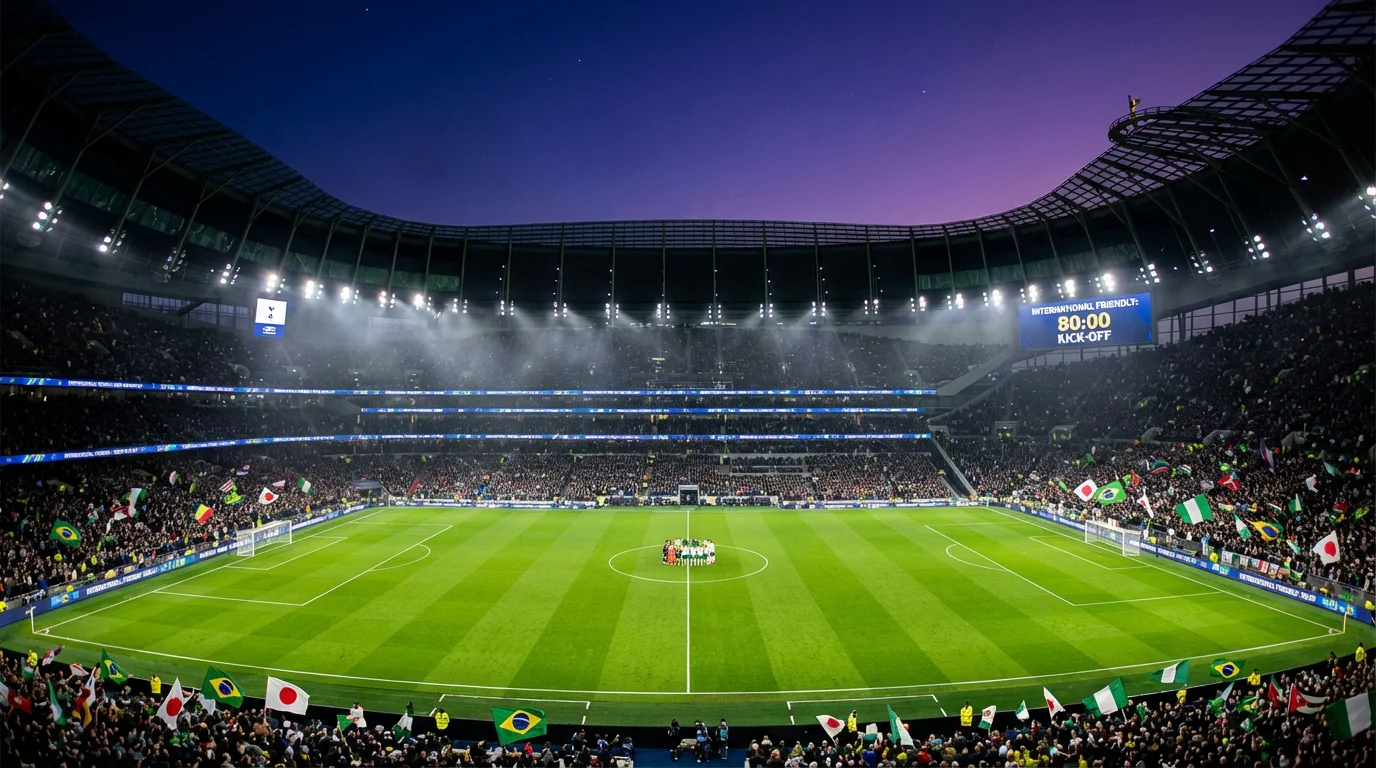
Expert Betting Insights for the World's Biggest Tournament
Nine years of covering World Cup betting markets, and I have never seen a tournament this wide open. The expanded 48-team format, three host nations and a qualification cycle that knocked Italy out via penalties against Bosnia and Herzegovina have scrambled every pre-tournament assumption. For Australian punters, the 2026 FIFA World Cup is a once-in-a-generation convergence: the Socceroos landed in a winnable Group D, kick-off times fall in AEST-friendly windows, and SBS is broadcasting all 104 matches free-to-air.
This hub is your base camp. I have broken down the outright odds in decimal format, mapped every group from A to L, profiled the Socceroos' path through Group D alongside the USA, Paraguay and Turkey, and unpacked the betting markets that matter most for this tournament. Whether you are building a multi for the group stage or hunting roughies at 80.00 and above, start here and dig deeper through the dedicated guides linked throughout.
World Cup 2026 Betting at a Glance
- The 2026 FIFA World Cup runs 11 June to 19 July across the USA, Mexico and Canada with 48 teams in 12 groups of four — the largest field in tournament history and a format that reshapes every betting market.
- Argentina, France, Brazil and England sit at the top of outright markets between 5.00 and 8.00, but the expanded bracket means dark horses at 15.00-plus carry genuine knockout-stage upside.
- The Socceroos face the USA, Paraguay and Turkey in Group D with all three matches on the US/Canadian west coast — translating to afternoon and morning AEST broadcasts.
- Australian punters operate under decimal odds, AUD stakes and the Interactive Gambling Act's in-play ban; credit cards and crypto are no longer accepted for online betting deposits as of June 2024.
- Value sits in group-stage qualification markets and specials rather than compressed outright pricing — I break down where below.
The Tournament at a Glance
Every four years the betting calendar resets, and 2026 is the biggest reset yet. FIFA has stretched the World Cup from 32 teams to 48, added a round of 32 to the knockout bracket, and split hosting duties across three countries on two continents. The structural changes alone are enough to render historical models unreliable — which is exactly where sharp punters find edges.
Twelve groups of four teams each feed into a 32-team knockout bracket. The top two sides from every group advance automatically, and the eight best third-placed finishers join them. That third-place lifeline is critical for group-stage betting: a team that loses its opening match can still qualify, which compresses "to qualify" odds and inflates "to win group" odds relative to what we saw in Qatar 2022.
New format, new maths: In a 32-team World Cup, 50% of teams advanced past the group stage. Under the 48-team structure with best-third qualification, roughly 67% of teams will reach the knockout rounds. That changes the risk profile of every qualification market on the board.
Format & Key Dates
The tournament spans 39 days from 11 June to 19 July 2026. Mexico's Estadio Azteca hosts the opening fixture — Mexico versus South Africa — on 11 June, making Azteca the only stadium in history to stage matches at three separate World Cups. The following day, the USA begin their campaign against Paraguay at SoFi Stadium in Los Angeles. The final takes place at MetLife Stadium in East Rutherford, New Jersey, on 19 July.
| Milestone | Date | Venue | AEST |
|---|---|---|---|
| Opening Match | 11 Jun | Estadio Azteca, Mexico City | 12 Jun ~08:00 |
| USA First Match | 12 Jun | SoFi Stadium, LA | 13 Jun ~09:00 |
| Socceroos First Match | 13 Jun | BC Place, Vancouver | 13 Jun ~15:00 |
| Group Stage Ends | 27 Jun | Various | 28 Jun |
| Round of 32 Begins | 28 Jun | Various | 29 Jun |
| Quarter-Finals | 4-5 Jul | Various | 5-6 Jul |
| Semi-Finals | 8-9 Jul | Various | 9-10 Jul |
| Final | 19 Jul | MetLife Stadium, NJ | 20 Jul ~08:00 |
The group stage runs for 17 days with up to six matches per day in the early rounds. For Australian viewers, the North American time zones mean most group-stage matches kick off between midday and 07:00 AEST — a dramatic improvement over the 2022 tournament in Qatar, where several Socceroos fixtures fell in the early hours.
Host Cities & Stadiums
Sixteen venues across three nations handle the 104-match schedule. The USA shoulders most of the load with 11 stadiums hosting 78 matches. Mexico contributes three stadiums and 13 matches, while Canada fields two venues — BC Place in Vancouver and BMO Field in Toronto — for a combined 13 fixtures.
| Country | Stadium | City | Capacity |
|---|---|---|---|
| USA | MetLife Stadium | East Rutherford, NJ | 82,500 |
| USA | SoFi Stadium | Inglewood, LA | 70,240 |
| USA | AT&T Stadium | Arlington, TX | 80,000 |
| USA | Hard Rock Stadium | Miami Gardens, FL | 64,767 |
| USA | NRG Stadium | Houston, TX | 72,220 |
| USA | Mercedes-Benz Stadium | Atlanta, GA | 71,000 |
| USA | Lumen Field | Seattle, WA | 68,740 |
| USA | Levi's Stadium | Santa Clara, CA | 68,500 |
| USA | Lincoln Financial Field | Philadelphia, PA | 69,176 |
| USA | Gillette Stadium | Foxborough, MA | 65,878 |
| USA | GEHA Field at Arrowhead | Kansas City, MO | 76,416 |
| Mexico | Estadio Azteca | Mexico City | 87,523 |
| Mexico | Estadio BBVA | Monterrey | 53,500 |
| Mexico | Estadio Akron | Guadalajara | 49,850 |
| Canada | BC Place | Vancouver | 54,500 |
| Canada | BMO Field | Toronto | 30,000 |
Estadio Azteca previously hosted World Cup finals in 1970 and 1986. Its 2026 opening match gives the venue a third consecutive decade of World Cup football — a record no other stadium holds.
The stage is set across 16 venues and three nations. Now, where does the smart money sit?
Outright Winner Odds
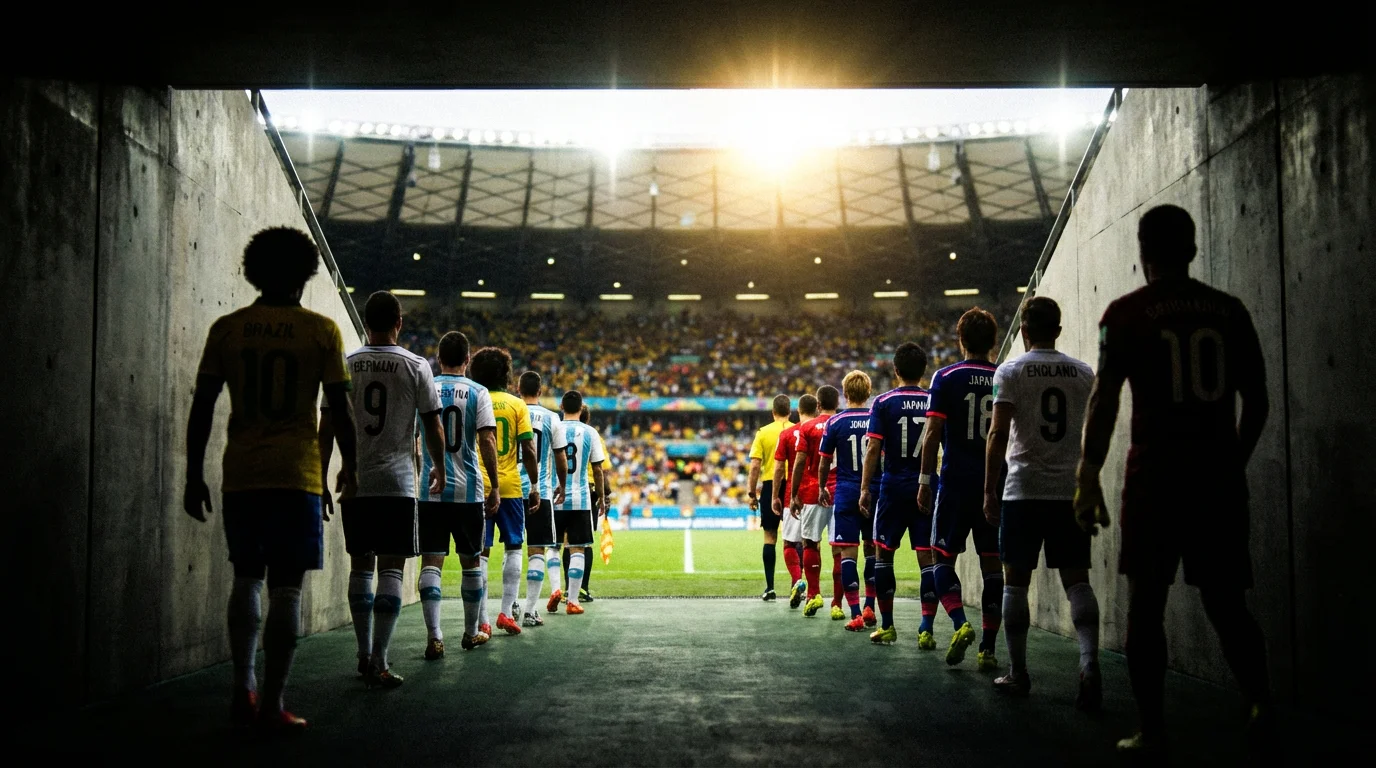
I pulled the opening match curtains back on the outright market about three months ago, and the picture has sharpened considerably since the March playoffs locked in the final eight qualifiers. Argentina remain the shortest-priced side in a market that is historically compressed by the expanded field — more teams means more knockout variance, and bookmakers know it. Below is where the major outright contenders sit in decimal odds as of early April 2026.
Top 5 Favourites
The defending champions and the usual suspects occupy the top of the market, but the gap between first and fifth is narrower than any World Cup cycle I have covered.
| Team | Group | Odds | Implied Probability |
|---|---|---|---|
| Argentina | J | 5.50 | 18.2% |
| France | I | 6.00 | 16.7% |
| England | L | 7.00 | 14.3% |
| Brazil | C | 7.50 | 13.3% |
| Spain | H | 8.00 | 12.5% |
Argentina's price reflects the Scaloni factor — continuity in coaching and squad core — but Group J with Algeria, Austria and Jordan should not be dismissed as a cakewalk. Algeria bring pace and physicality from Africa, and Austria have been consistently competitive in European qualifying cycles. France carry the deepest squad in the tournament with Mbappé entering his peak years, though their Group I draw includes a Senegal side that thrives in tournament settings.
England's pricing has drifted slightly since the Euro 2024 final defeat to Spain, but the squad's knockout experience — back-to-back European Championship finals — justifies the single-digit odds. Brazil have underperformed relative to talent since 2002, and their 7.50 feels about right given the gap between squad depth and recent tournament execution. Spain, the reigning European champions, offer the best value in the top tier at 8.00 given their blend of youth and tactical coherence under Luis de la Fuente.
Value Picks & Roughies
The real action for value-hunters sits outside the top five. Here is where the expanded format changes the maths: in a 32-team World Cup, a dark horse needed to survive a group of death and win three consecutive knockout matches to reach a semi-final. Now, the path from group qualification to the last eight is one round shorter, and the best-third-place route means even a slow start can be recovered.
| Team | Group | Odds | Value Signal |
|---|---|---|---|
| Germany | E | 11.00 | Favourable draw, home-continent proximity |
| Netherlands | F | 13.00 | Underrated squad transition |
| Portugal | K | 13.00 | Knockout pedigree, Bernardo-Leao axis |
| USA | D | 17.00 | Host nation uplift, crowd factor |
| Colombia | K | 26.00 | Copa America finalists, squad depth |
| Japan | F | 34.00 | Best-ever generation, UEFA league experience |
| Morocco | C | 41.00 | 2022 semi-finalists, tournament know-how |
Germany at 11.00 in a Group E that features Côte d'Ivoire, Ecuador and Curaçao represents one of the softer draws for a traditional power. The USA at 17.00 deserve attention purely on home advantage — across all World Cup editions, host nations have reached at least the quarter-finals 62% of the time. Japan's generation of European-based talent is the strongest in AFC history, and their 34.00 understates the threat they pose in Group F against the Netherlands and Sweden.
The outright market is compressed by the 48-team format. The real edge is not in picking the winner at 5.50 but in identifying which mid-tier sides will overperform their group-stage odds — that is where the return-on-investment sits for Australian punters building pre-tournament positions.
Outright prices set the frame. Let me break down every group to show where those edges actually live.
All 12 Groups — Quick Guide
Twelve groups, 48 teams, and a best-third-place safety net that makes every group more unpredictable than the old format allowed. I have spent the past fortnight re-modelling group outcomes after the March playoffs confirmed the final eight qualifiers — Czechia, Bosnia and Herzegovina, Turkey, Sweden, Iraq, DR Congo and Panama all earned their spots in the last available window. Here is a snapshot of each group with my verdict on who advances and where the value sits.
| Group | Teams | Predicted to Qualify | Danger Match |
|---|---|---|---|
| A | Mexico, South Korea, South Africa, Czechia | Mexico, South Korea | South Korea vs Czechia |
| B | Canada, Switzerland, Qatar, Bosnia & Herzegovina | Switzerland, Canada | Canada vs Bosnia & Herzegovina |
| C | Brazil, Morocco, Scotland, Haiti | Brazil, Morocco | Brazil vs Morocco |
| D | USA, Paraguay, Australia, Turkey | USA, Australia | Australia vs Turkey |
| E | Germany, Côte d'Ivoire, Ecuador, Curaçao | Germany, Ecuador | Côte d'Ivoire vs Ecuador |
| F | Netherlands, Japan, Sweden, Tunisia | Netherlands, Japan | Netherlands vs Japan |
| G | Belgium, Iran, New Zealand, Egypt | Belgium, Egypt | Iran vs Egypt |
| H | Spain, Saudi Arabia, Cabo Verde, Uruguay | Spain, Uruguay | Spain vs Uruguay |
| I | France, Senegal, Norway, Iraq | France, Senegal | Senegal vs Norway |
| J | Argentina, Algeria, Austria, Jordan | Argentina, Austria | Algeria vs Austria |
| K | Colombia, Portugal, Uzbekistan, DR Congo | Portugal, Colombia | Colombia vs Portugal |
| L | England, Croatia, Ghana, Panama | England, Croatia | England vs Croatia |
Group A gives Mexico the ideal opening as co-hosts, and South Korea's consistent tournament pedigree makes them clear second favourites. Czechia are disciplined but lack the firepower to threaten the top two. South Africa carry home-continent momentum from 2010 but are the weakest side here on current form.
Group B hinges on whether Bosnia and Herzegovina's stunning penalty upset of Italy in the playoff translates into group-stage confidence. Switzerland are the most reliable tournament performers in the group, while Canada benefit from home fixtures at BMO Field in Toronto. Qatar's form since hosting the 2022 tournament has been underwhelming.
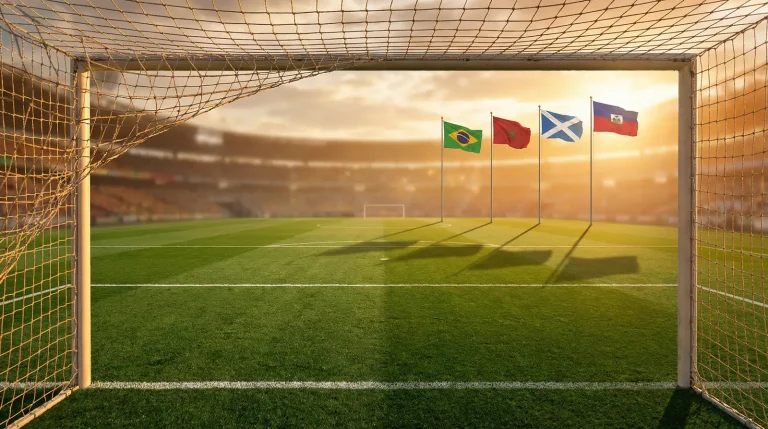
Group C is the one neutrals will watch. Brazil versus Morocco replays the African side's 2022 heroics against European opposition, and Morocco's semi-final experience makes them a serious threat to top the group. Scotland's qualification is a bright spot for British football, but Haiti — the group's debutants — face a steep learning curve.
Group D belongs to the Socceroos section below, but the headline is clear: this group is genuinely open. The USA have home advantage, Turkey arrived via a tense 1-0 playoff win over Kosovo, and Paraguay's CONMEBOL qualification form was patchy. Australia have every reason to believe they can finish second.
Group E is the softest draw for a traditional power. Germany face Côte d'Ivoire, Ecuador and Curaçao — the latter making their World Cup debut. Ecuador are the most dangerous second seed here, and Côte d'Ivoire's Africa Cup of Nations title in 2024 gives them tournament pedigree, but Germany should advance comfortably.
Group F is the group of quality. Netherlands against Japan is a genuine 50/50 match, and Sweden — who beat Poland 3-2 in the playoff — add further depth. Tunisia's experience in World Cup finals rounds makes them competitive but unlikely to challenge for second. This is the tightest group in the draw for betting purposes.
Group G features Belgium alongside Iran, New Zealand and Egypt. Belgium's golden generation is ageing, and their group-stage form in recent tournaments has been inconsistent. Egypt and Iran will compete hard for second place, with New Zealand the likely fourth.
Group H pairs Spain with Uruguay in a repeat of historic World Cup clashes. Saudi Arabia bring the upset potential they showed against Argentina in 2022, and Cabo Verde are the tournament's smallest nation by population. Spain should top the group; the fight for second between Uruguay and Saudi Arabia is where the market offers value.
Group I gives France a comfortable draw on paper, but Senegal are a tier above the typical third-pot African qualifier. Norway, powered by Erling Haaland, are dangerous in any single match. Iraq qualified through the intercontinental playoff by beating Bolivia 2-1 and will be competitive without being genuine qualification threats.
Group J is Argentina's to control. Algeria and Austria will contest second place, and Jordan — AFC qualifiers with strong defensive structure — could surprise as a best-third qualifier. The key market here is Austria's qualification price, which feels undervalued given their European qualifying record.
Group K is loaded. Colombia and Portugal in the same group creates a genuine coin-flip for top spot. Uzbekistan qualified from Asia and will be respected opponents, while DR Congo earned their place through a hard-fought 1-0 intercontinental playoff win over Jamaica in extra time.
Group L brings together England and Croatia — two teams who met in the 2018 semi-final. Ghana and Panama fill the remaining spots, and while both are capable of individual upsets, the top two should separate from the bottom two across three matchdays.
Under the old 32-team format, the 2026 field would have required 16 additional qualifying spots. Five of the eight playoff winners — Bosnia and Herzegovina, Czechia, Sweden, Iraq and DR Congo — would not have reached the tournament at all.
Twelve groups mapped. Now for the one that matters most to this audience — Group D and the Socceroos.
Socceroos in Group D — Australia's Path
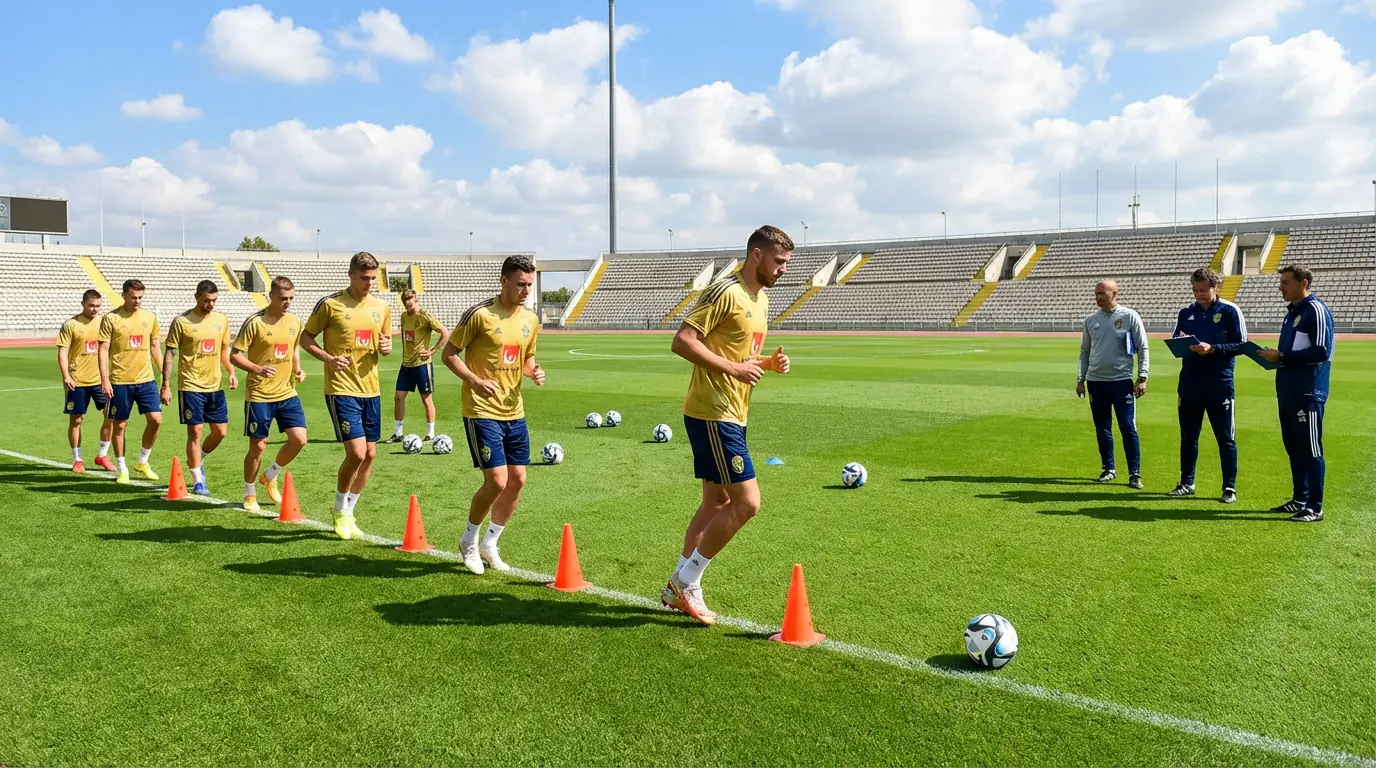
Let me take you back to December 2022. The Socceroos had just beaten Denmark to reach the knockout stage in Qatar — their first World Cup round-of-16 appearance since 2006 — and the squad carried a belief that the Australian football public had not seen at senior level in over a decade. That belief matters now, because the Group D draw is simultaneously the best and most dangerous assignment Australia could have received.
The USA are clear favourites as co-hosts and Pot 1 seeds. Turkey arrive through a nervy 1-0 win over Kosovo in the UEFA playoff C final. Paraguay qualified via South America, where the qualifying campaign was inconsistent — strong home form, poor away results. Australia sit in the middle of this group by market pricing, and I believe the Socceroos have a realistic path to second place or a best-third qualification.
The logistical advantage is significant. All three Socceroos group matches are on the west coast of North America — Vancouver, Seattle and Santa Clara. The travel distances are short, the time zones are clustered, and the AEST broadcast windows are far kinder than European tournaments. Australian fans who remember setting 03:00 alarms for the 2022 group stage will appreciate a 15:00 AEST kick-off for the opening match against Turkey.
Match Schedule (AEST)
The opening fixture against Turkey is the pivotal match. A win in Vancouver puts the Socceroos in control of their own qualification. The second match against the USA in Seattle is the highest-profile fixture — a dawn kick-off in AEST, which may dampen Australian viewing figures but will be played in a cauldron of American support. The final group match against Paraguay in Santa Clara is the most likely decider, with both teams potentially fighting for second place or a best-third berth.
Odds to Qualify
| Market | Australia | USA | Turkey | Paraguay |
|---|---|---|---|---|
| To Win Group D | 5.50 | 1.65 | 4.00 | 7.50 |
| To Qualify | 2.10 | 1.18 | 2.25 | 3.50 |
| To Finish Last | 4.50 | 15.00 | 4.00 | 2.50 |
Australia's 2.10 to qualify implies a 47.6% probability. I think the true probability sits closer to 55%, driven by three factors: the Socceroos' 2022 knockout experience under a similar tactical structure, the west-coast logistics advantage, and Turkey's relative inexperience at World Cup level — this is their first finals appearance since 2002. At 2.10, there is enough margin to make the Socceroos' qualification a value play in this group.
Group D Predicted Finish:
1st — USA · 2nd — Australia · 3rd — Turkey · 4th — Paraguay
Confidence: Medium. Turkey are a genuine threat for second, and the opening match in Vancouver is close to a coin-flip. But Australia's tournament experience and tactical maturity give them the edge in a tight three-way race.
Group D is where the Socceroos' tournament lives or dies. Beyond the local angle, here are the betting markets that apply across all 104 matches.
Key Betting Markets Explained

Ask five different punters what they are backing for the World Cup and you will get five different market types. The sheer volume of betting options for a 104-match tournament can paralyse decision-making, so let me cut through the noise and focus on the markets that offer genuine edges rather than entertainment-only propositions.
Head-to-head (win bet) is the foundation. You are backing one team to win the match in 90 minutes, with the draw as a third option in the group stage. Group-stage head-to-head markets carry a draw price, which typically sits between 3.20 and 3.60 for evenly matched sides. The draw is the most underappreciated bet in World Cup group stages — historically, roughly 25% of group matches end level.
Line betting (handicap) adjusts for the gap in quality between two sides. A -1.5 line on Brazil against Haiti means Brazil need to win by two or more goals for the bet to pay. Line betting shines in matches where the head-to-head odds are too short to offer value — backing Germany at 1.20 head-to-head against Curaçao returns almost nothing, but a -2.5 line at 2.10 creates a genuine proposition.
Overs/unders (total goals) markets are set at 2.5 goals for most World Cup matches. The historical average across World Cup group stages sits at 2.4 goals per match, which means the unders line offers a slight statistical edge in the group phase. Knockout matches trend even lower — the average drops below 2.0 in quarter-finals and semi-finals — making unders a structural play in the later rounds.
Outright and futures markets cover everything from the tournament winner to the top scorer, most cards, and which confederation produces the best-performing team. The outright winner market is the most liquid but also the most overround-heavy. Golden Boot (top scorer) markets offer better value because the outcome is driven by individual opportunity — how many matches a striker's team plays — rather than pure team quality.
Multi bets combine two or more selections into a single wager. The combined odds multiply, creating larger potential returns from smaller stakes. A three-leg multi on France, Argentina and England to win their opening group matches might combine to 4.80 from individual odds of 1.45, 1.50 and 1.55. The risk scales with each added leg — and bookmakers' overround compounds across legs, which is why I recommend capping World Cup multis at three or four selections maximum.
Overround — the bookmaker's built-in margin across all outcomes in a market. If the implied probabilities of all selections sum to 108%, the overround is 8%. Lower overround means better value for the punter.
| Market | Best For | Risk Level | Edge Potential |
|---|---|---|---|
| Head-to-Head | Single-match punters | Low-Medium | Moderate (draws underbet) |
| Line Betting | Lopsided group matches | Medium | High (mismatches) |
| Overs/Unders | Structural bettors | Low | Moderate (unders bias) |
| Outrights | Pre-tournament positions | High | Low (compressed odds) |
| Multis | Small stakes, big return | Very High | Low (overround compounds) |
| Top Scorer | Player-level analysts | High | High (opportunity-driven) |
Markets mapped. Before placing a single bet, here is what every Australian punter needs to know about the legal framework.
Betting in Australia — What You Need to Know
I moved to covering the Australian market full-time in 2019, and the regulatory landscape has shifted more in the past three years than in the preceding decade. The fundamentals remain the same — online sports betting is legal through licensed operators — but the guard rails have tightened significantly, and several new restrictions will directly affect how you bet on the World Cup.
Legal Framework & Restrictions
The Interactive Gambling Act 2001, amended in 2017, sets the federal framework. Online sports betting is legal through operators licensed by state and territory authorities — Liquor & Gaming NSW, VGCCC in Victoria, and equivalent bodies across each jurisdiction. The Australian Communications and Media Authority (ACMA) enforces the federal rules, including blocking unlicensed offshore operators.
Four restrictions matter most for World Cup betting in 2026:
The in-play ban. Online live betting on matches in progress is prohibited. You cannot place a bet on Australia to score the next goal while the match is live — not through a website and not through an app. The only legal route for in-play bets is by telephone, which remains a deliberate friction point designed to slow impulsive wagering. This restriction is unique to Australia among major regulated markets and is particularly relevant for a tournament with multiple simultaneous group-stage matches.
Payment restrictions. Since June 2024, credit cards and cryptocurrency are no longer accepted for online betting deposits. Debit cards, bank transfers and approved e-wallets are the remaining deposit methods. If you previously funded your account via credit card, you will need to update your payment method before the tournament begins.
BetStop. The national self-exclusion register launched in August 2023 and now covers all licensed Australian operators. Registration with BetStop closes your accounts across every participating bookmaker for a minimum period of three months, with options extending to a lifetime ban.
Advertising restrictions (2027). Prime Minister Albanese announced on 2 April 2026 a new package of gambling advertising restrictions set to take effect from 1 January 2027. The changes include limiting betting advertisements to three per hour on television between 06:00 and 20:30, banning all betting advertising during live sport broadcasts, prohibiting the use of athletes and celebrities in betting promotions, removing bookmaker branding from stadiums and player uniforms, and restricting online betting ads to verified users aged 18 and over. While these rules take effect after the 2026 World Cup concludes, they signal the direction of travel for the Australian market.
Currency note: All odds on this site are quoted in decimal format, and all stake examples use Australian dollars (AUD). A 2.50 decimal odd means a A$10 stake returns A$25 total — your A$10 stake plus A$15 profit.
In-Play Lag Calculator
Australia bans online in-play betting, so a live bet has to go through a phone call. The bookmaker doesn't charge you for that call — the match clock does. Set the scene below and watch what the wait does to a fair price.
| Live market | At the whistle | When you're on | Move |
|---|
How this is calculated
- Your pre-match 1X2 prices are stripped of margin, then reverse-engineered into two scoring rates (goals per 90) with an independent-Poisson fit. Those rates are shown top-right of "The match".
- Live probabilities come from the remaining scoring rates and the current scoreline. A red card scales the short-handed side's remaining rate by 0.74 and the opponent's by 1.18.
- Every second on the phone is a second off the match clock, so the fair price is recalculated at the minute your bet is actually accepted — not the minute you dialled.
- The price you're offered converges from the board price you dialled on toward the new fair price on a 21-second half-life, which is roughly how fast a suspended football market re-forms after a goal or a card.
- Interruption risk is the Poisson chance of another goal landing inside your call window.
- A model, not a feed. It shows the shape and size of the problem, not tonight's exact price.
Australian licensed bookmakers cannot accept in-play bets online under the Interactive Gambling Act 2001 — telephone only. 18+. Set a deposit limit before the tournament, not during it. Gambling Help 1800 858 858 · betstop.gov.au
Responsible Gambling
Australia has among the highest per-capita gambling expenditure in the world, and the industry generates approximately A$6 billion annually from online wagering alone. The World Cup is a peak period for betting activity — the combination of national team loyalty, 39 days of continuous football and accessible AEST broadcast times creates conditions where spending can escalate quickly.
Set a tournament budget before the first match kicks off. Decide the total amount you are prepared to lose across the entire World Cup — not per match, not per day, but across all 39 days — and track against that number. Every licensed Australian operator is required to offer deposit limits, loss limits and session time reminders. Use them. They exist specifically for extended tournament periods like this one.
If gambling stops being entertainment and starts causing stress, the national Gambling Help line operates 24 hours at 1800 858 858, and BetStop registration is available at betstop.gov.au to close all accounts simultaneously.
Legal framework covered. Now the part you came for — who I think wins, and where the smart bets sit.



Expert Predictions & Tips

I have been wrong about World Cup winners before — backed Germany in 2018 and they went out in the group stage, backed Brazil in 2022 and Croatia ended that in the quarters. But the process matters more than the outcome on any single tournament, and my process here says the value does not lie in the outright winner market. It lies in the layers beneath.
Outright pick: France at 6.00. Not because they are the best team in the tournament — Argentina probably hold that distinction on squad quality — but because France's combination of depth, tournament pedigree and a favourable Group I draw gives them the highest probability-adjusted return in the top tier. Mbappé will be 27, entering his physical peak. Tchouameni and Camavinga give the midfield an engine room that no other nation can match for combined pace and power. And Deschamps, for all the criticism, has a 2018 title and a 2022 final to show for his pragmatic approach.
Dark horse: Japan at 34.00. I flagged Japan in my pre-qualification coverage and nothing since has changed my view. This generation of Japanese players — Kubo, Mitoma, Kamada, Endo — play in the top divisions of European football and bring tactical maturity that previous Samurai Blue squads lacked. Group F with the Netherlands, Sweden and Tunisia is tough but navigable, and Japan's Round of 16 potential makes them a live bet for a quarter-final run at minimum.
Value angle: group-stage qualification markets. The compressed nature of outright odds under the 48-team format means the smartest tournament plays sit in the group-stage tier. Specifically, I am looking at teams whose qualification odds imply a lower probability than their actual chance of advancing. The Socceroos at 2.10 to qualify from Group D, Austria at 2.40 to qualify from Group J, and Ecuador at 2.00 to qualify from Group E all fit this profile.
| Prediction | Selection | Odds | Confidence |
|---|---|---|---|
| Outright Winner | France | 6.00 | Medium |
| Dark Horse (QF+) | Japan | 34.00 | Medium-High |
| Golden Boot | Mbappé | 8.00 | Medium |
| Group D Winner | USA | 1.65 | High |
| Socceroos to Qualify | Australia | 2.10 | Medium-High |
| Most Group Stage Goals | Group C (Brazil, Morocco, Scotland, Haiti) | 9.00 | Low-Medium |
Golden Boot lean: Mbappé at 8.00. The top scorer market rewards opportunity as much as talent. If France reach the semi-finals, Mbappé will have played six or seven matches as the primary attacking focal point. Historical Golden Boot winners average 1.0 goals per match played — Mbappé's international strike rate exceeds that benchmark. The risk is an early French exit, which would cap his opportunities at three or four group matches.
Structural tip for tournament multis. If you are building a multi, mix market types rather than stacking match results. A three-leg multi combining France to qualify from Group I (1.12), over 2.5 goals in Brazil vs Haiti (1.55), and Australia to beat Paraguay (2.20) creates a combined price of approximately 3.82 with three uncorrelated outcomes. That is smarter than backing three teams to win their opening match, where a single upset collapses the entire ticket.
Sample Multi Calculation
Leg 1: France to qualify from Group I — 1.12
Leg 2: Over 2.5 goals in Brazil vs Haiti — 1.55
Leg 3: Australia to beat Paraguay — 2.20
Combined odds: 1.12 x 1.55 x 2.20 = 3.82
A$20 stake returns A$76.40 (profit A$56.40)
The 48-team format favours a portfolio approach: spread risk across group-stage qualification bets, add one or two specials with uncorrelated outcomes, and keep outright exposure modest. The edges in this tournament sit in the layers, not the headline market.
Predictions laid out. Below are the questions I get asked most often about World Cup 2026 betting.


FAQ
The 2026 FIFA World Cup features 48 teams divided into 12 groups of four. The top two teams from each group advance to the round of 32, along with the eight best third-placed finishers. This means 32 of 48 teams — roughly two-thirds of the field — reach the knockout stage. The knockout bracket then runs from the round of 32 through to the final at MetLife Stadium on 19 July. The expanded format adds one extra knockout round compared to the previous 32-team structure and significantly increases the probability that any given team advances past the group stage.
Online in-play betting is prohibited under the Interactive Gambling Act. You cannot place a live bet through a website or mobile app while a World Cup match is in progress. The only legal method for in-play betting in Australia is by telephone — calling your bookmaker directly to place the wager. This applies to all licensed Australian operators. Pre-match bets, including those placed minutes before kick-off, remain fully legal through any online platform.
All three Socceroos group matches are on the west coast of North America. Australia vs Turkey at BC Place in Vancouver kicks off at approximately 15:00 AEST on 13 June. USA vs Australia at Lumen Field in Seattle is scheduled for around 05:00 AEST on 20 June. Paraguay vs Australia at Levi's Stadium in Santa Clara kicks off at approximately 12:00 AEST on 26 June. The afternoon and midday AEST times are considerably more viewer-friendly than European tournament schedules.
SBS holds the exclusive free-to-air broadcast rights for all 104 matches of the 2026 FIFA World Cup in Australia. Every group-stage match, knockout fixture and the final will be available on SBS television and through the SBS On Demand streaming platform at no cost. This is the most comprehensive free-to-air World Cup coverage Australia has ever had.
Australian bookmakers use decimal odds as the standard format. Decimal odds represent the total return on a one-unit stake — so odds of 3.00 mean a A$10 bet returns A$30 total (A$10 stake plus A$20 profit). To calculate implied probability from decimal odds, divide 1 by the odds: 1 / 3.00 = 33.3%. All odds quoted on this site use the decimal format in Australian dollars.
No. Since June 2024, credit cards and cryptocurrency are banned as deposit methods for online betting in Australia. Debit cards, direct bank transfers and approved e-wallets are the accepted payment methods. If you have not updated your deposit method since this change, check with your bookmaker before the World Cup begins to ensure your account is ready for the tournament.
The market prices Australia at approximately 2.10 to qualify from Group D, implying a 47.6% probability. The Socceroos are in a three-way contest with Turkey and Paraguay for second place behind the USA. Australia's 2022 World Cup experience — they advanced from a group containing France — their tactical stability and the favourable west-coast logistics support a realistic chance of qualification. The opening match against Turkey in Vancouver is the swing fixture: a win there puts Australia in a strong position with two group matches remaining.
Your World Cup 2026 Betting Starts Here
The 2026 FIFA World Cup is the largest, most complex and most bet-upon football tournament ever staged. Forty-eight teams across 16 venues in three countries over 39 days create a volume of betting opportunities that no previous World Cup has matched. The expanded format compresses outright odds, inflates qualification markets and introduces a best-third-place pathway that fundamentally changes group-stage dynamics.
I have covered the outright market, every group from A through L, the Socceroos' path through Group D, the key betting markets and the Australian regulatory framework in this hub. Each section links to deeper analysis across dedicated guides — from the complete betting guide for first-time World Cup punters to individual team profiles, group breakdowns, value bet analysis and the full AEST match schedule.
Set your budget. Pick your markets. And remember that the best World Cup bets are the ones you can justify with data, not just the ones that feel good after the third beer at your local. The tournament kicks off on 11 June at Estadio Azteca. The Socceroos open against Turkey in Vancouver on 13 June. The clock is ticking.
Gambling Help: If you or someone you know needs support, contact Gambling Help on 1800 858 858 (24 hours) or visit gamblinghelponline.org.au. You must be 18 or older to gamble in Australia.
