
BC Place — World Cup 2026 Venue: Socceroos’ Opening Match Stadium
 Available in US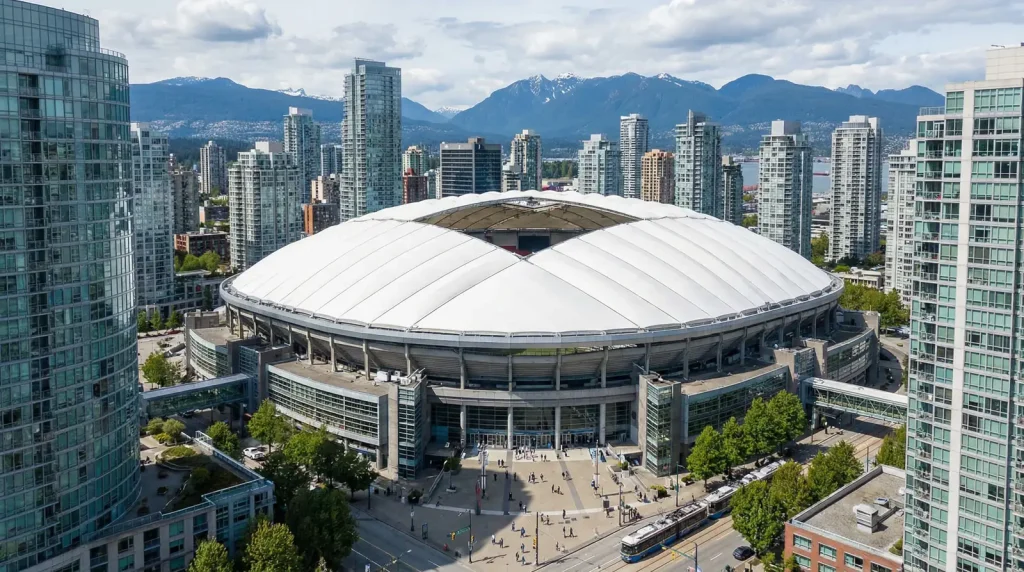
Table of Contents
There is a particular kind of nervousness that comes with a national team’s opening World Cup match. I felt it watching the Socceroos kick off against France in Qatar — a mixture of hope, dread, and the knowledge that 90 minutes would determine the emotional trajectory of the next two weeks. On 13 June 2026, that feeling returns when Australia face Turkey at BC Place in Vancouver, and the stadium itself will shape the occasion in ways that matter for both the atmosphere and the betting markets. This is the venue where the Socceroos’ 2026 World Cup begins, and everything about it — the retractable roof, the Canadian soccer culture, the time-zone advantage for Australian viewers — deserves scrutiny.
Stadium at a Glance
BC Place sits in the heart of downtown Vancouver, a city that feels more Pacific Rim than typically North American. The stadium opened in 1983, making it one of the older venues in the World Cup rotation, but a comprehensive renovation completed in 2011 transformed it with a retractable roof, upgraded seating, and modern broadcast infrastructure. The renovation cost C$563 million and included the installation of the largest retractable roof in the world at the time — a cable-supported fabric membrane that can open or close in approximately 20 minutes.
| Detail | Information |
|---|---|
| Full Name | BC Place Stadium |
| Location | Downtown Vancouver, British Columbia, Canada |
| Opened | 1983 (renovated 2011) |
| Renovation Cost | C$563 million |
| Capacity (FIFA configuration) | Approximately 54,500 |
| Surface | Natural grass (temporary installation for World Cup) |
| Roof | Retractable (cable-supported fabric membrane) |
| Primary Tenant | Vancouver Whitecaps FC (MLS) |
| Other Events | 2015 FIFA Women’s World Cup Final, CFL Grey Cup |
The retractable roof is the single most important architectural feature for match-day conditions. Vancouver in mid-June averages 18-22 degrees Celsius with a meaningful chance of rain — the city receives measurable precipitation on roughly 40% of June days. With the roof closed, BC Place becomes a climate-controlled indoor arena where temperature, wind, and moisture are neutralised. With it open, the pitch is exposed to the Pacific Northwest elements. FIFA’s decision on roof position will be made before each match based on weather forecasts, and that decision has direct implications for betting markets: closed-roof conditions favour technical teams with precise passing, while open-roof rain or wind conditions create unpredictability that benefits physical, direct sides.
The 54,500 FIFA-configuration capacity makes BC Place one of the smaller World Cup venues, roughly 25,000 fewer seats than MetLife or SoFi. That intimacy works in favour of atmosphere — a full BC Place generates noise levels that rival larger open-air stadiums because the roof traps sound and directs it onto the pitch. During the 2015 Women’s World Cup Final between USA and Japan, the crowd noise at BC Place was measured at levels comparable to much larger venues. For the Socceroos, a vocal travelling contingent of Australian fans inside a compact, loud stadium could replicate the intimidating atmosphere that helped them upset Denmark in Qatar.
Australia vs Turkey — The Socceroos’ Opener
The first match of any World Cup campaign sets the tone for everything that follows. A win and the squad relaxes into the tournament. A draw and the calculations begin. A loss and the pressure ratchets up to a level where mistakes multiply. For the Socceroos at BC Place on 13 June, the Turkey fixture is not just their opening match — it is the fixture that determines whether they enter the USA clash on matchday two with confidence or desperation.
Turkey arrived at this World Cup through the UEFA playoff path, beating Kosovo 1-0 in a match characterised by defensive discipline and limited attacking creativity. Under Vincenzo Montella, Turkey have adopted an Italian-influenced tactical structure: a compact midfield block, quick transitions through wide channels, and a reliance on individual brilliance from their attacking players rather than systematic chance creation. Their defensive record in qualifying was excellent — four goals conceded in six matches — but the attacking output has been inconsistent, with long stretches of possession that produce minimal threat.
The Socceroos’ tactical approach under their current setup mirrors the Arnold-era philosophy that produced the round-of-16 run in Qatar: defend in a compact 4-4-2 block, invite pressure without conceding central space, and attack quickly through wide runners and set pieces. This style is ideally suited to a tournament opener against a side that also prioritises defensive stability. The match profiles as a cagey, low-event affair — both coaches will be more concerned with avoiding defeat than chasing victory.
The head-to-head market sits approximately at Australia 3.40, Draw 3.20, Turkey 2.25. I rate the draw as the most likely outcome at around 32-35% probability, which makes the 3.20 price a marginal value play. Under 2.5 goals at 1.65 is the angle I trust most in this fixture — the combination of tournament-opener caution, two defensively minded coaches, and a BC Place atmosphere that amplifies pressure all point towards a tight, low-scoring match. The Socceroos’ history in World Cup openers (W1 D1 L3 across five tournaments) suggests they start cautiously, and Turkey’s playoff victory was decided by a single goal in a match with just four total shots on target.
All World Cup Matches at BC Place
Vancouver is one of two Canadian host cities alongside Toronto, and BC Place is allocated a share of the 13 matches that Canada hosts during the tournament. Group-stage fixtures from multiple groups pass through BC Place, along with potential Round of 32 matches. The venue’s smaller capacity means FIFA has assigned it group-stage and early knockout fixtures rather than quarter-finals or semi-finals, which are reserved for the mega-stadiums in the United States.
For Australian punters, the BC Place schedule matters beyond the Socceroos’ opener. Any group match hosted here carries the venue-specific characteristics discussed above — retractable roof, compact atmosphere, natural grass surface, moderate temperatures — and those factors should be integrated into your match analysis. A team accustomed to playing in enclosed, loud stadiums (think any side from the Bundesliga or Serie A) will feel comfortable at BC Place, while teams from leagues where open-air exposure is the norm may find the acoustic intensity unsettling.
The atmosphere for the Australia vs Turkey fixture specifically will be shaped by Vancouver’s multicultural demographics. The city has significant Turkish and Australian expatriate communities, and both fan groups are known for passionate match-day support. Turkish fans in particular bring a level of vocal intensity — drums, chants, coordinated singing — that transforms stadiums into cauldrons. The Socceroos’ travelling support, bolstered by the relatively accessible travel from Australia’s west coast to Vancouver (direct flights to Vancouver operate from Sydney in approximately 14 hours), will need to match that energy to create a genuine home-ground feel.
Vancouver — Getting There from Australia
Vancouver is the closest World Cup host city to Australia by flight time, and that geographical advantage is not trivial. Direct flights from Sydney to Vancouver take approximately 14 hours — two hours shorter than Sydney to Los Angeles and six hours shorter than the trans-Pacific-plus-connection route to eastern US cities. Air Canada and Qantas codeshare on the Sydney-Vancouver route, with daily departures during the summer travel period.
Vancouver operates on Pacific Daylight Time during the World Cup (UTC-7), placing it 17 hours behind AEST. A match kicking off at noon local time translates to 05:00 AEST the following day, while an evening kick-off at 19:00 local produces a 12:00 AEST viewing slot. The Socceroos’ opener against Turkey is scheduled for approximately 15:00 AEST on 13 June — a mid-afternoon slot that is the most viewer-friendly of Australia’s three group matches.
Accommodation in downtown Vancouver ranges from A$250 to A$500 per night for mid-range hotels during the World Cup period. BC Place’s downtown location means public transport access is straightforward — the SkyTrain’s Stadium-Chinatown station sits directly adjacent to the venue, and bus routes from every major suburb converge on the downtown core. Unlike most American World Cup venues, where car dependency is unavoidable, Vancouver’s public transport system can genuinely handle match-day crowds without gridlock. Walking from most downtown hotels to BC Place takes under 20 minutes, and the waterfront promenade connecting Gastown, Yaletown, and the stadium precinct will be a hub of fan activity throughout the tournament.
Kick-Off Times in AEST
| Local Kick-Off (PT) | AEST Equivalent | Fixture Context |
|---|---|---|
| 12:00 (noon) | 05:00 (+1 day) | Group stage — early risers |
| 15:00 (3pm) | 08:00 (+1 day) | Group stage — comfortable morning |
| 18:00 (6pm) | 11:00 (+1 day) | Knockout round — late morning |
| 19:00 (7pm) | 12:00 (+1 day) | Knockout round — lunchtime |
The Socceroos’ opener against Turkey at approximately 15:00 AEST falls in the afternoon window — the best possible slot for live Australian viewership. SBS will broadcast the match live, and the timing means pubs, clubs, and workplaces across Australia will have the game on screens. That level of exposure drives betting volume and creates deeper, more liquid markets for the fixture compared to a 3am kick-off that only dedicated fans would watch. If you are planning to bet on the Australia vs Turkey match, the market depth at 15:00 AEST will offer better prices and tighter spreads than you would find for any other Socceroos group match.
