
MetLife Stadium — World Cup 2026 Final Venue: Guide & Matches
 Available in US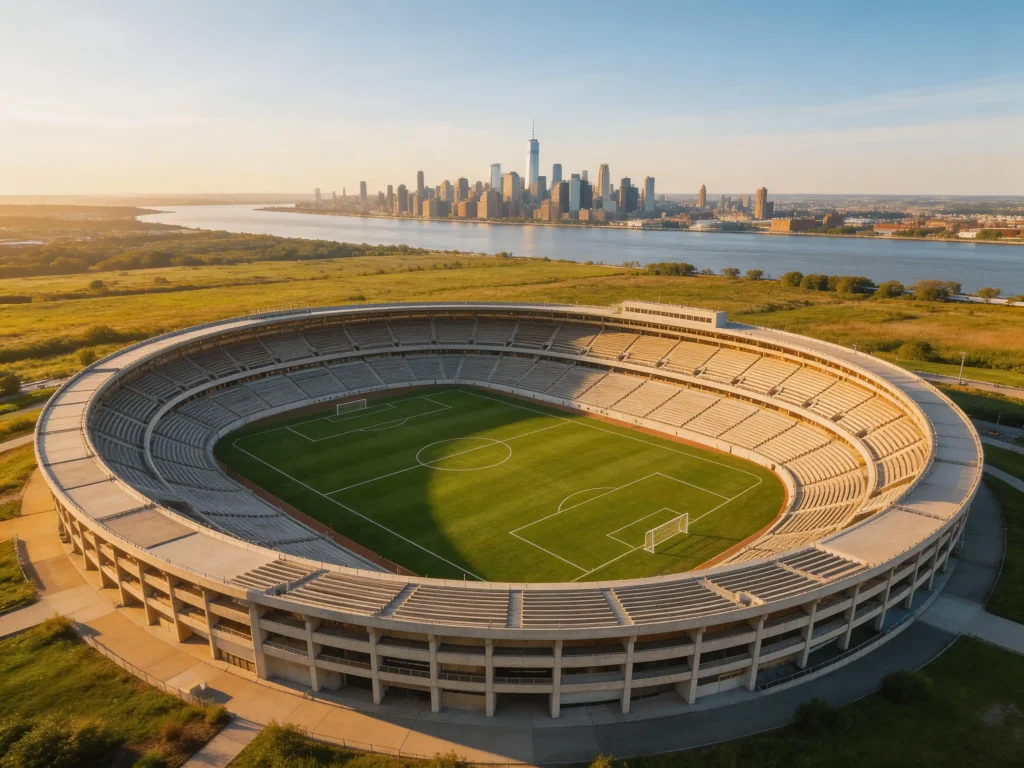
Table of Contents
On 19 July 2026, two teams will walk out of the tunnel at MetLife Stadium in East Rutherford, New Jersey, and one of them will lift the FIFA World Cup trophy. That single fixture — the 2026 World Cup final — makes MetLife the most important venue in world football this year. But the stadium’s role in the tournament extends well beyond the final. Group-stage matches, knockout fixtures, and a semi-final all pass through this 82,500-seat colosseum across the Hudson River from Manhattan. For any Australian punter with an outright bet, a top-scorer wager, or even a speculative multi running deep into the tournament, MetLife is where the money lands.
Stadium at a Glance
MetLife Stadium is a study in American sporting scale. Opened in 2010 at a cost of US$1.6 billion, it replaced the old Giants Stadium on the same Meadowlands Sports Complex site and immediately became the largest NFL stadium by seating capacity. The venue is shared by two NFL franchises — the New York Giants and the New York Jets — making it one of only two stadiums in America with two primary tenants.
| Detail | Information |
|---|---|
| Full Name | MetLife Stadium |
| Location | East Rutherford, New Jersey (12 km from Manhattan) |
| Opened | April 2010 |
| Construction Cost | US$1.6 billion |
| Capacity (FIFA configuration) | Approximately 82,500 |
| Surface | Natural grass (installed for World Cup) |
| Roof | Open-air |
| NFL Tenants | New York Giants, New York Jets |
| Previous Major Football Events | Copa America 2024, International friendlies |
The open-air design is the critical detail for betting analysis. Unlike SoFi in Los Angeles or AT&T Stadium in Dallas, MetLife has no roof protection. New Jersey in July averages temperatures between 24 and 31 degrees Celsius with humidity levels that can push the heat index significantly higher. For evening kick-offs — which the semi-final and final will be — temperatures drop to the low 20s, but afternoon group-stage matches could test player fitness in ways that favour squads with deep benches and effective rotation strategies. The open roof also means wind and rain are live variables. MetLife sits in the Meadowlands, an exposed flat area where northwesterly winds can gust above 30 km/h — enough to affect long-range passing and crossing accuracy.
FIFA has mandated a natural grass installation for the World Cup, replacing the FieldTurf artificial surface that MetLife uses during the NFL season. The grass conversion involves laying a purpose-grown turf over a temporary drainage system, and the quality of this surface has been a point of discussion among players’ unions concerned about footing and injury risk. Copa America 2024 used the same venue with a temporary grass surface, providing a test case that FIFA will use to refine the installation for 2026.
The World Cup Final — 19 July 2026
Every outright winner bet placed on the 2026 World Cup resolves at MetLife Stadium on the evening of 19 July. The final kicks off at 19:00 ET (local time), which translates to 09:00 AEST on 20 July — a Sunday morning in Australia. That timing is remarkable for Australian punters: the biggest single match in world sport falls on a weekend morning, watchable live with a coffee rather than a 3am alarm. The broadcast audience in Australia for the 2022 final (Argentina vs France) was 3.2 million — a figure that could be matched or exceeded if the Socceroos are still alive in the tournament, though even without Australian involvement, a Sunday-morning final will draw enormous viewership.
The final venue choice carries symbolic weight. New York City — or more precisely, the New Jersey side of the Hudson — represents the global capital of commerce, culture, and media. FIFA selected MetLife over rival bids from Dallas and Los Angeles partly for that symbolism and partly for infrastructure: the New York metropolitan area offers 120,000+ hotel rooms, three major international airports (JFK, Newark, LaGuardia), and a public transport network that can move hundreds of thousands of people on match day. The PATH train and NJ Transit bus routes connect MetLife to Manhattan, though seasoned attendees recommend arriving 3-4 hours early and staying in the Meadowlands precinct rather than relying on post-match public transport.
From a betting perspective, the final venue matters because of the conditions it creates. An open-air stadium in late-July New Jersey heat favours teams with superior fitness, squad depth, and experience managing high-pressure knockout football in uncomfortable conditions. Historically, European and South American sides have dominated World Cup finals — no African, Asian, or CONCACAF team has ever reached the final — and the physical demands of MetLife in July do nothing to change that dynamic. If you are placing an outright winner bet, the venue bias slightly favours sides with deep squads and experience in warm-weather tournaments: Brazil, Argentina, France, and Spain all fit that profile.
All Matches at MetLife
MetLife Stadium hosts matches across every stage of the tournament — group fixtures, Round of 32, quarter-finals, a semi-final, and the final itself. The exact allocation of group-stage fixtures depends on scheduling logistics, but the venue is confirmed for multiple group matches involving teams drawn in the eastern-seaboard cluster, plus the marquee knockout fixtures that FIFA wants in its showcase venue.
The semi-final at MetLife, scheduled for 15 July, is a significant betting event in its own right. Semi-final markets often carry inflated margins because the bookmakers are pricing four possible combinations with limited data on how the specific matchups will play out. The venue conditions at MetLife — open air, potential humidity, natural grass surface — should be factored into any semi-final or final betting. Teams that have played multiple matches in the eastern US during the group stage will have acclimatised; teams arriving from the west coast or Mexico may need a day or two to adjust to the humidity differential.
For Socceroos fans dreaming of an extended run, the path to MetLife would require surviving Group D, winning a Round of 32 match, and then navigating two further knockout rounds. The Socceroos’ group matches are all on the west coast, so a deep run would involve cross-country travel and climate adjustment — a logistical challenge that Australia’s 2022 squad managed effectively in Qatar but that becomes more complex across the continental distances of North America.
New York / New Jersey — Travel Tips
Flying into the New York area from Australia means landing at either JFK (Queens, New York) or Newark Liberty (New Jersey). Qantas operates direct Sydney-JFK services, while United flies nonstop from Sydney to Newark — the Newark option places you closer to MetLife Stadium, with a 25-minute drive or a NJ Transit connection. Flight time from Sydney is approximately 20 hours eastbound, and the time difference is 14 hours behind AEST during the World Cup period (Eastern Daylight Time, UTC-4).
Accommodation in the Meadowlands area around MetLife is limited to a cluster of chain hotels — the kind of functional, highway-adjacent properties that serve NFL game-day crowds. For a richer experience, stay in Manhattan (30-45 minutes from MetLife by bus or train) or Hoboken/Jersey City (20-30 minutes, with views across the Hudson to the Manhattan skyline). Budget A$300-600 per night for mid-range Manhattan hotels during the World Cup period. Booking early is essential — the final weekend will be the most in-demand hotel period in New York since New Year’s Eve 1999.
Match-day transport to MetLife operates through NJ Transit buses from the Port Authority Bus Terminal in midtown Manhattan. The ride takes 30-40 minutes under normal conditions but can stretch to 90 minutes on event days. Rideshare surge pricing around MetLife on match days is severe — expect A$150+ for a one-way trip from Manhattan during peak periods. The cheapest and most reliable option is the dedicated shuttle bus service that FIFA will operate from multiple collection points across the metropolitan area.
Kick-Off Times in AEST
MetLife’s eastern time zone location creates AEST conversions that split neatly between unwatchable and ideal, depending on whether the match is an afternoon or evening fixture.
| Local Kick-Off (ET) | AEST Equivalent | Typical Round |
|---|---|---|
| 13:00 (1pm) | 03:00 (+1 day) | Group stage |
| 16:00 (4pm) | 06:00 (+1 day) | Group stage / R32 |
| 19:00 (7pm) | 09:00 (+1 day) | Knockout / Semi / Final |
| 20:00 (8pm) | 10:00 (+1 day) | Final (if delayed start) |
The World Cup final at 19:00 ET lands at 09:00 AEST on a Sunday morning — a prime viewing window for Australian audiences. Group-stage afternoon fixtures at 13:00 ET are tougher at 03:00 AEST, but any match scheduled for 16:00 ET or later becomes a manageable 06:00 AEST start. For punters, the evening knockout matches at MetLife are the ones where Australian betting volume peaks, and the markets are deepest — more liquidity means tighter spreads and better prices on head-to-head, total goals, and player prop markets.
